Deepfake Reality: The AI Illusion We Can’t Ignore

Yesterday evening, I was relaxed, winding down on a Sunday, when a friend showed me a reel on Instagram. “Look at this! Crazy how they cleaned that octopus!” the kind of video you’d mindlessly watch on TikTok or Instagram, thinking nothing of it.
At first, I was amazed. It looked real. But then, something clicked. Wait a minute… isn’t this AI-generated?
I rewatched it, this time paying attention. And yes, I saw it. The classic AI video patterns of 2025:
- Short, under 4 seconds (because AI still struggles with longer coherent videos).
- Choppy, with different sequences stitched together.
- Subtle shifts in details, objects slightly changing because today’s AI models can’t perfectly recreate the same scene across multiple frames.
I had fallen into the trap. I, someone who works with AI, had been fooled. My friend didn’t even question it. And when I checked the comments? Even worse. People marveled at it, completely unaware it wasn’t real.
The Invisible AI Takeover
This isn’t just about an AI-generated octopus-cleaning video. It’s about something bigger.
Back in 2023, the AI Act was signed in Europe, aiming to regulate AI-generated content by 2025–2026. The idea? We should be able to clearly distinguish AI-generated media from reality. Platforms like Meta even proposed deleting AI content that isn’t labeled as such.
Yet, here we are in 2025, scrolling through Instagram, Facebook, and TikTok, drowning in AI-generated visuals and most people don’t even notice.
And that’s terrifying. Because if we can’t tell what’s real anymore, how do we trust anything?
Beyond Fake Images: A Threat to Our Perception
It would be one thing if this was just about AI-generated entertainment. But the real danger isn’t just fake videos, it’s the erosion of our own perception of reality.
We’re stepping into a world where hyper-realistic AI fabrications could shake democracy itself. Where avatars and fake realities can influence us…
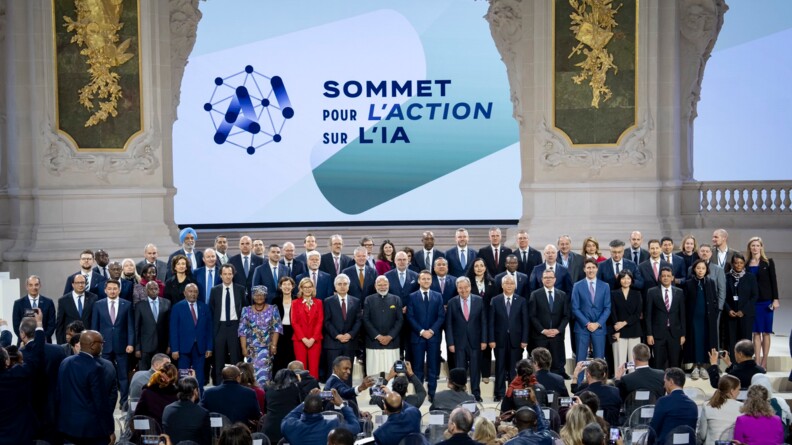
And to make things even more complicated, at the Sommet de l’Action pour l’Intelligence Artificielle in Paris in February, European politicians reportedly stepped back from some AI Act regulations. Understandable, given the AI advancements between the US, China, and Europe. But while governments hesitate, AI-generated deception grows stronger.
Of course, with great power comes great responsibility. The AI ethics debate is intensifying, and 2025 is expected to be a year of heightened discussions around AI safety, misinformation, and bias.
Regulations will start catching up, forcing tech companies to prioritize transparency and fairness. However, in the meantime, many of us will be affected, and we can see that reflected in the votes as well…

How Do We Fight This?
Honestly? I don’t have a perfect answer.
Do I, as an individual, start teaching people how to spot AI-generated fakes?
Do we build better AI detection tools when even I sometimes struggle to recognize a deepfake?
It reminds me of my time at Hermès, where we were trained to distinguish real bags from counterfeits. The problem? Over time, fake producers got so good that even professionals struggled to tell the difference.
That’s where we are today with AI. The best we can do is accept that what we see online is probably fake, until proven otherwise.
It’s a harsh reality, but one we must embrace.
So, good luck navigating this ocean of deepfakes. Don’t despair, AI is also bringing incredible advancements. But learn. Protect yourself. Protect truth. Protect democracy. 🙏
And most importantly, question everything.
NB: So far, we have been quite lucky with mostly gags and memes (like this one that I created for fun 👇). But how long before it turns different?